

By Jasmin Johory
Indian classical dance is more than performance. It is a living tradition that carries stories, spirituality, discipline and cultural identity across generations and borders. Rooted in centuries of history, dance forms such as Bharatanatyam and Kathak have travelled far beyond India, adapting to new audiences and spaces while preserving their cultural essence.
The History of Indian Classical Dance
Indian classical dance traces its origins back thousands of years to ancient Hindu temples and sacred texts. Dance was not originally viewed as entertainment alone; it was deeply connected to spirituality, storytelling and devotion.
The foundations of Indian classical dance are often linked to the Natya Shastra, an ancient Sanskrit text written by Bharata Muni between 200 BCE and 200 CE. This text became a guide for drama, music and dance, describing body movements, expressions, gestures, costumes and emotions.
The classical dance traditions of India developed differently across regions, creating distinct styles that reflected local cultures, languages and religious traditions.
Bharatanatyam emerged in Tamil Nadu and was traditionally performed in temples by Devadasis as a form of devotion. Known for its movements, expressive storytelling and complex footwork, Bharatanatyam highlights discipline and precision.
Kathak, on the other hand, originated in northern India. The word “Kathak” comes from katha, meaning story. Early Kathak performers were storytellers who travelled from village to village narrating tales from Hindu epics through music, movement and expression.
During the Mughal period, Kathak absorbed Persian influences and evolved into a court dance defined by spins, footwork and expressions.
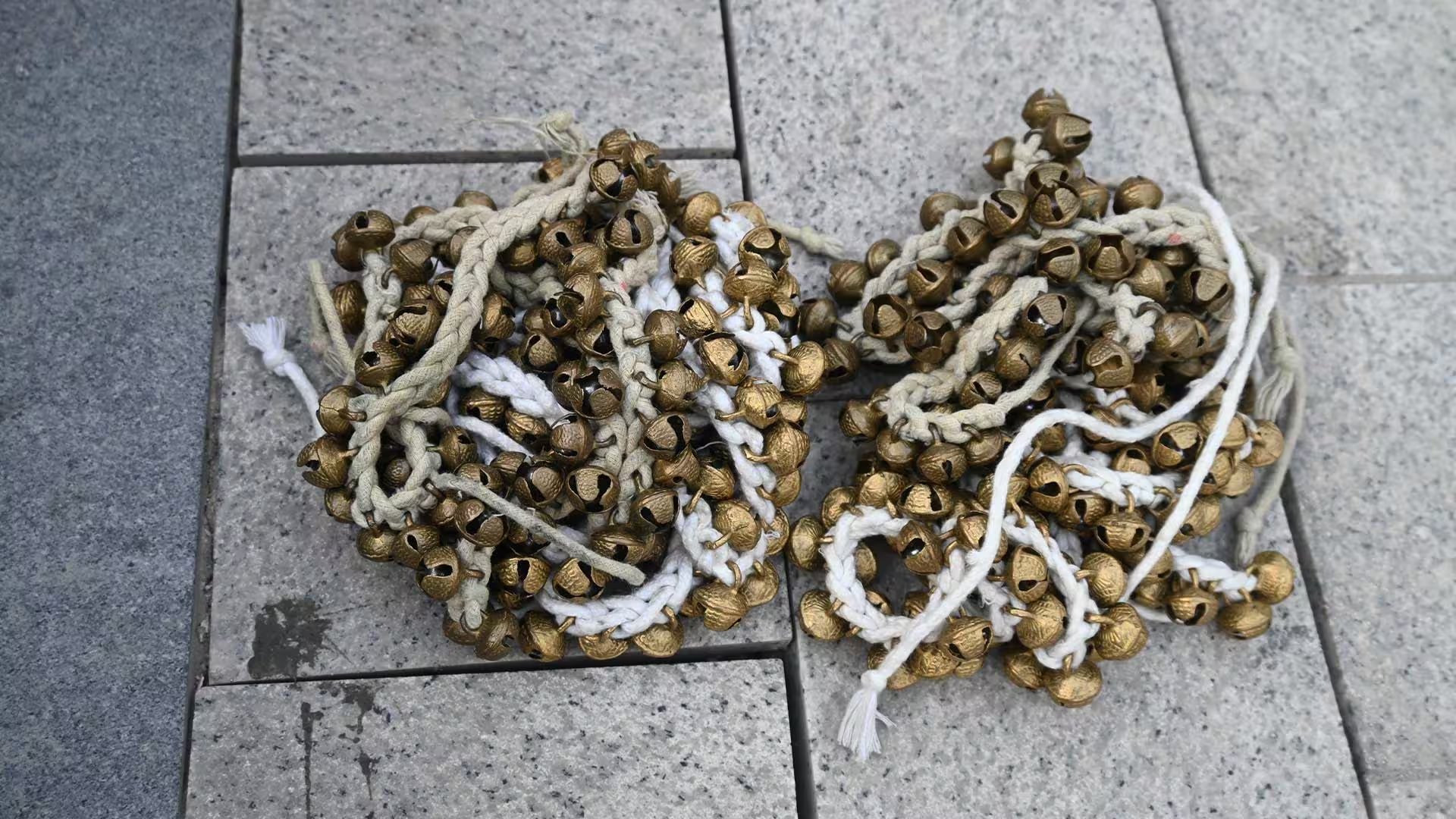
A defining element of Kathak and Bharatanatyam dance form is the use of ghungroos, small metallic bells tied around the ankles. These bells are not decorative; they are essential to rhythm and timing. Each movement of the dancer produces sound, turning footwork into a musical instrument that interacts with live percussion. The clarity and precision of ghungroo sounds reflect the dancer’s control, discipline and training.
Tapasya Shekhawat, a Kathak Dancer, says that “In performances, the sound intensifies rhythmic patterns and helps the audience hear the choreography as much as they see it.”
Over time, ghungroos become personal to each dancer, symbolizing years of practice, endurance and artistic growth.
Despite regional differences, these dance forms shared common elements: storytelling, symbolism, spirituality, rhythm and emotional expression.
Indian classical dance uses mudras, or hand gestures, to communicate meaning. Through mudras, dancers can represent entire narratives without speaking. Facial expressions and eye movements are equally important, allowing dancers to connect emotionally with audiences.
These gestures are highly organized and learned through years of disciplined training. Each mudra carries meanings depending on context, movement and expression, making the body a complete storytelling instrument.
Today, Indian classical dance exists as heritage and contemporary expression. It is taught in academies, performed in theatres and shared widely through social media and digital platforms.
Yet even as the art form modernizes, many dancers continue to see it as a spiritual and cultural practice rather than just a performance.
Migration of Indian Classical Dance from India to the UAE
The migration of Indian classical dance to the United Arab Emirates reflects broader patterns of migration between India and the Gulf region. Over the past several decades, more than five million Indians moved to the United Arab Emirates for work, education and business opportunities. Along with language, food, religion and festivals, migrants also carried cultural traditions such as music and dance.
For the Indian community, classical dance became a way to remain connected to home. Dance schools, cultural organizations and community events created spaces where younger generations could learn about Indian heritage even while growing up abroad.
Bharatanatyam dancer, Shruthi Sathyan, says that “In many households, learning Bharatanatyam or Kathak is not only seen as an art form but also as a way of preserving language, values and identity.”
This makes dance both a cultural practice and a personal link to heritage. Living in a multicultural environment also influences how dancers understand their own identity. Many performers describe classical dance as something that grounds them culturally, especially in a fast-paced and an environment like the UAE.
While adapting to diverse audiences, these dance forms also highlight the importance of maintaining authenticity in expression and discipline.
Unlike in India, where classical dance is deeply rooted in everyday cultural life, dancers in the UAE often practice within multicultural environments. Performances take place not only in Indian community spaces but also at school events and multicultural celebrations.
One of the major themes explored in the interviews was how classical dance adapts when practiced outside India.
Sathyan says that “Performing for multicultural audiences often requires additional explanation about gestures, stories and symbolism”
The UAE’s multicultural environment has influenced the identity of Indian classical dance in unique ways.
Shekhawat says that “Classical dance maintains its traditional identity even outside India because the techniques, stories and discipline remain rooted in heritage.”
The Indian community plays a crucial role in sustaining classical dance traditions in the UAE.
“Parents often encourage children to learn Bharatanatyam or Kathak to preserve cultural identity and maintain a connection with India,” says Shekhawat. Through performances, festivals and competitions, they participate in traditions that connect them to earlier generations.
Shekhawat adds that “Through performances, dance creates opportunities for cultural exchange between Indian communities and people from different nationalities.”
The experience of practicing Bharatanatyam or Kathak in the UAE also shapes dancers personally. Living away from India often strengthens emotional attachment to tradition.
Sathyan says that “Performing classical dance abroad made them appreciate their cultural heritage more deeply.”
As younger generations continue learning classical dance in the UAE, the future of the tradition appears evolving. Technology and multicultural collaboration are making Indian classical dance more visible than before.
At the same time, dancers and teachers remain committed to preserving the discipline and authenticity of the art form.
Indian classical dance carries centuries of history, spirituality and storytelling. From ancient temples in India to multicultural stages in the UAE, Bharatanatyam and Kathak continue to evolve while maintaining their cultural depth.
“The migration of dance reflects the migration of people themselves. As Indian communities built new lives in the UAE, they also created spaces where traditions could survive and adapt,” Sathyan says.
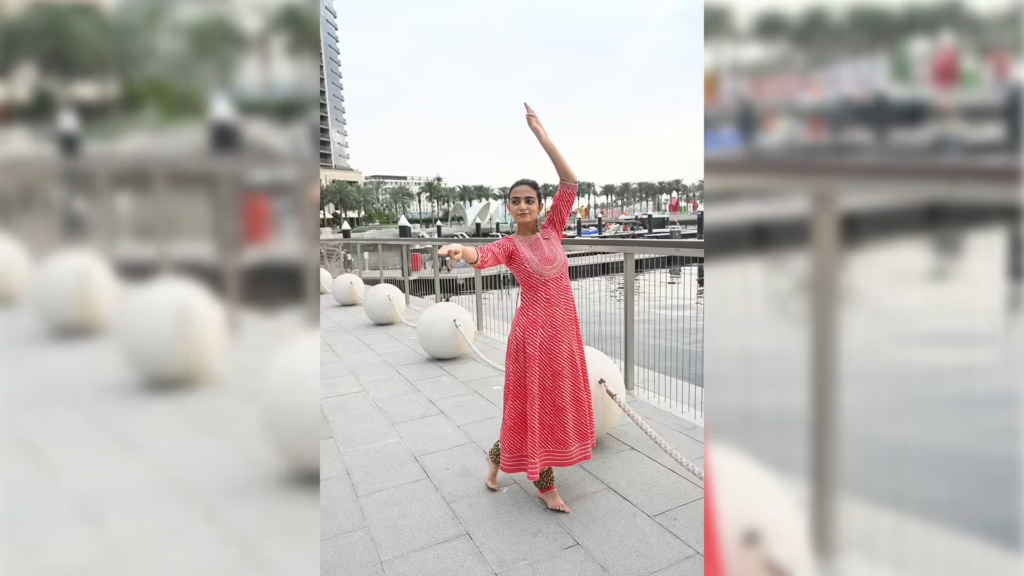
Through performances, teaching and community engagement, classical dance has become both a reminder of home and a bridge to new audiences.
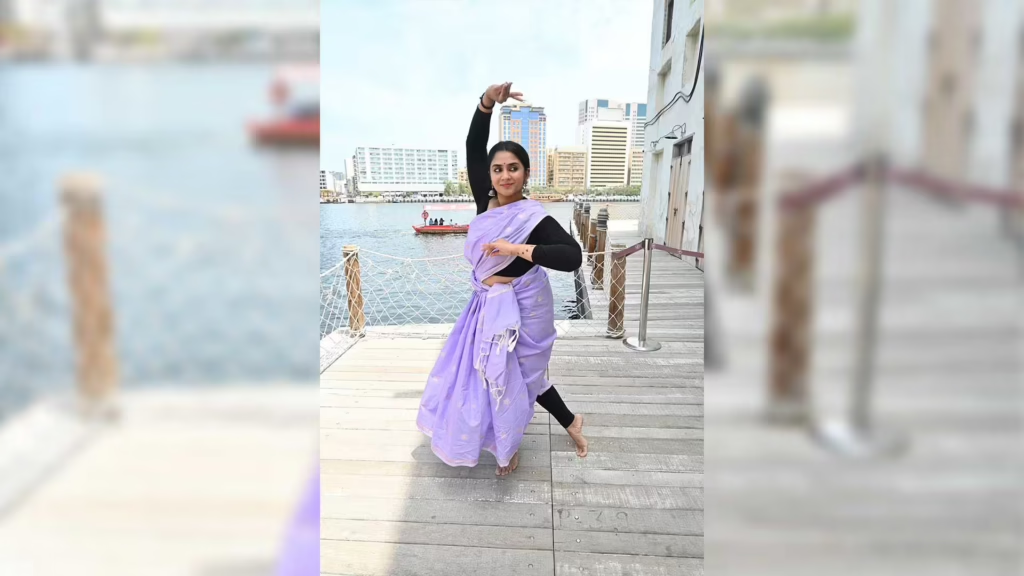
In every movement, gesture and rhythm, Indian classical dance continues to exist as a record of culture, one that travels, transforms and endures across borders.