

By Fatima Hassan
Inside one of Sharjah’s most preserved heritage homes, a generation of visitors walk through rooms whose meanings no longer announce themselves.
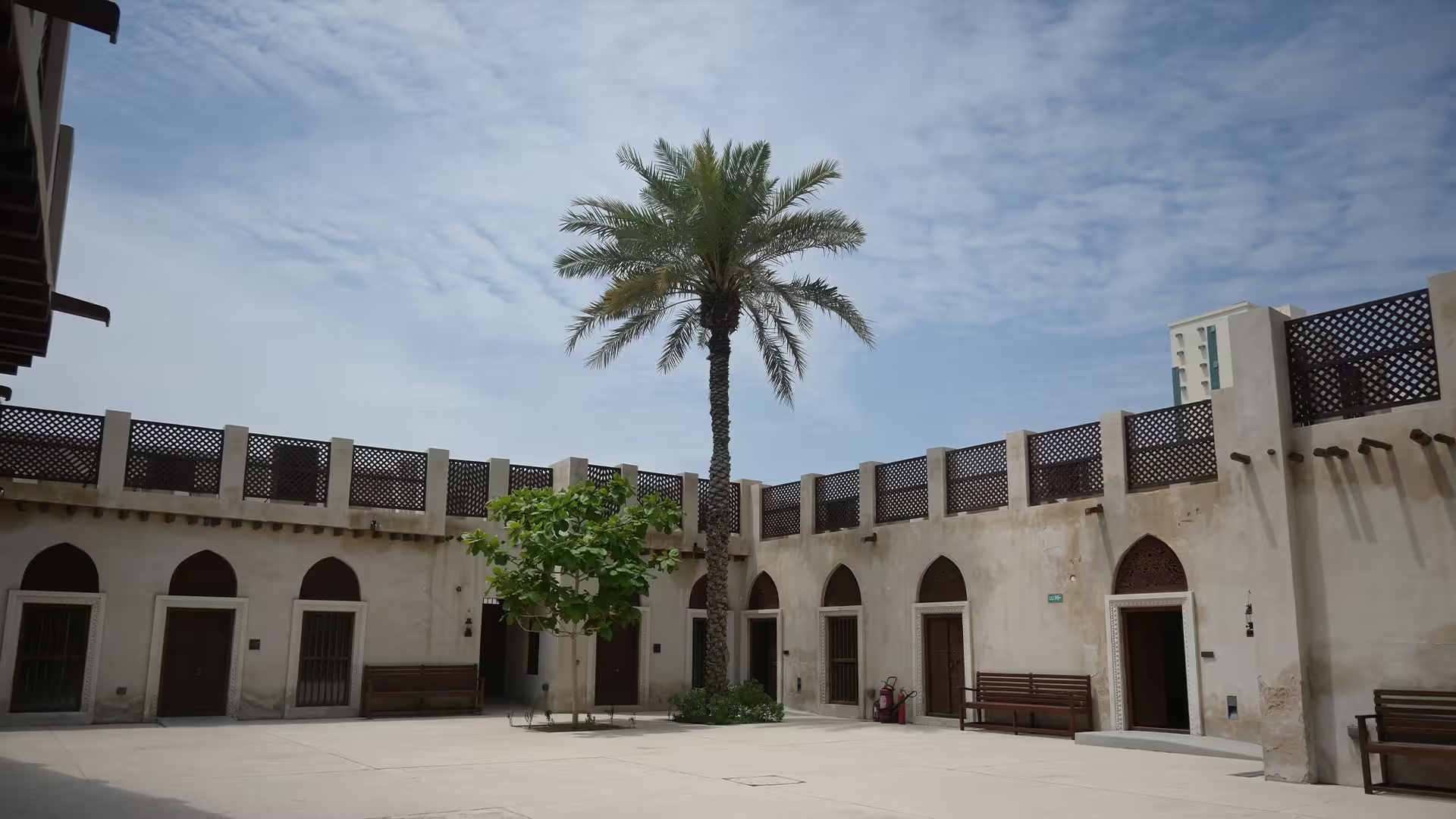
A boy, maybe 7, sprints across the courtyard at Bait Al Naboodah, scattering two pigeons. He runs another loop, then ducks under the covered walkway, where his mother is reading a placard. The courtyard goes quiet again, except for the birds.
For a moment, it is easy to imagine that the courtyard was always meant to sound this way, with children running, footsteps echoing off stone, and voices drifting between rooms. Then the boy returns, and his mother takes his hand and leads him into one of the rooms.
Bait Al Naboodah, one of the most preserved heritage houses in the Heart of Sharjah district, was built around the rhythms of daily life: where a family ate, where guests were received, where air moved, where privacy ended and community began. That logic is no longer obvious to most visitors. As fewer younger visitors arrive with the cultural memory needed to read these spaces on their own, the question is no longer whether the house can be preserved. It is whether the house can still be understood, and what is lost when it cannot.
A house designed around daily life
Nothing inside Bait Al Naboodah is decorative for its own sake. The two-story home, built in 1845 for one of Sharjah’s most prominent pearl-trading families, was shaped by climate, custom and the rhythms of an extended household. Its layout still carries those rhythms, even when no one is moving through it.
To understand how, American University of Sharjah Professor of Architecture, Kevin Mitchell, traces the house’s origins, its trade ties to India and the way its layout shaped daily life.
The location was not accidental. A scale model in the museum shows how the house sat near Sharjah’s harbor and port, strategically placed for an owner whose business depended on pearls and international trade.
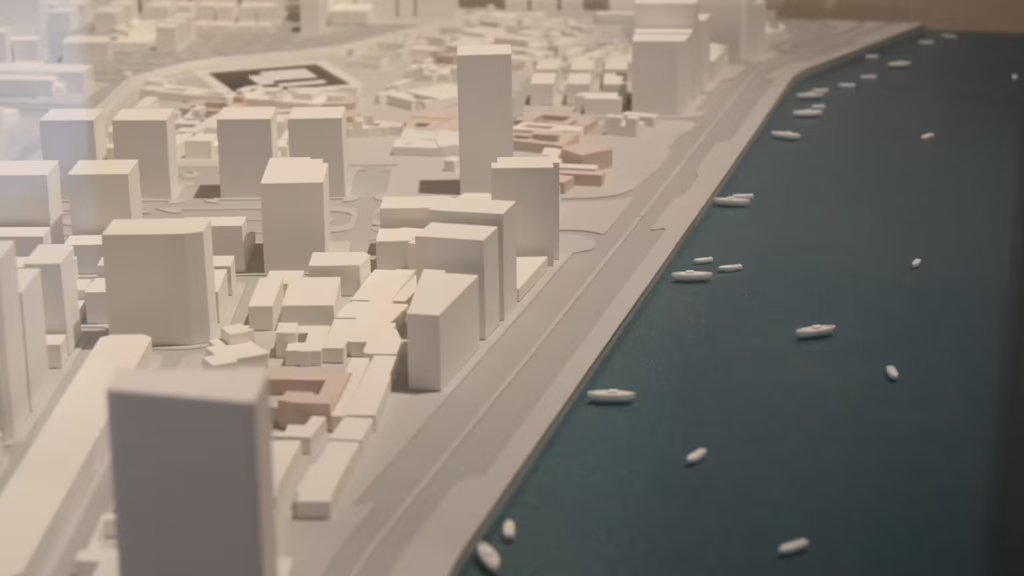
Many of the furnishings inside — the canopied bed, the cupboards, the chests, the peacock mirror — were imported from India along the same trade routes.
The courtyard sits at the center of the house and connects every other space. Rooms open onto it. Air passes through it. In its original use, it absorbed everything that did not belong indoors: meals, conversation, children, the long hours of an afternoon. Now, on a humid morning, the only sound moving through it is birds in the wooden ceiling beams and a visitor’s shoes on the stairs at the far end. Every footstep announces itself.
Near the entrance, the majlis sits as a deliberate boundary between public and private life. It is where the household received visitors, conducted business and observed the customs of hospitality. Guests were not meant to move past it.
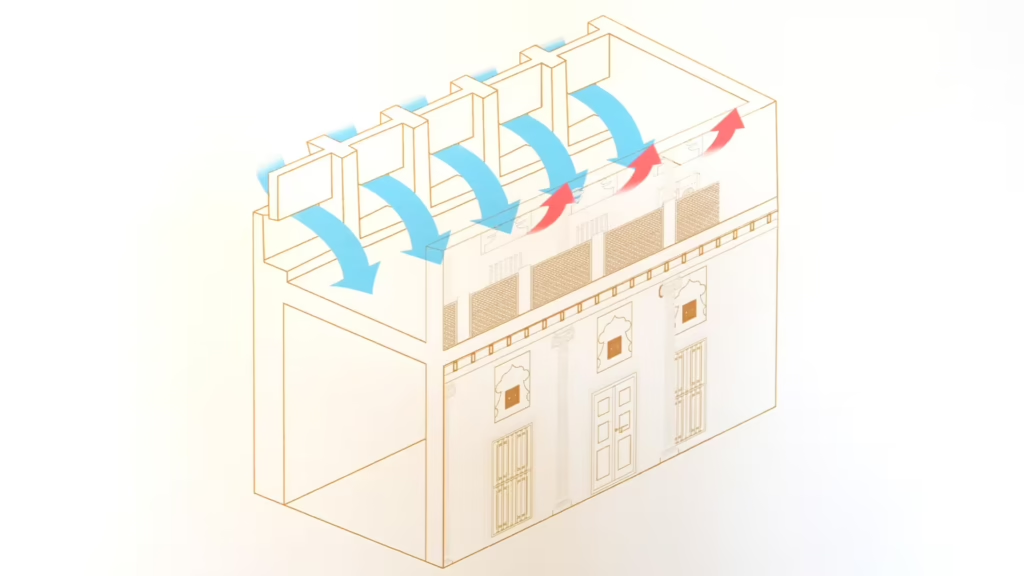
Wind towers, called barjeel, drew hot air upward and out while channeling cooler breezes down into the rooms below. Long before mechanical air conditioning, they made the upper floors livable in summer.
The summer room used a different system. A schematic posted on the wall shows airflow as a set of arrows curling in through high wall openings and across the room, carrying heat out the other side. This diagram explains how the design performed the work of what machines do nowadays.
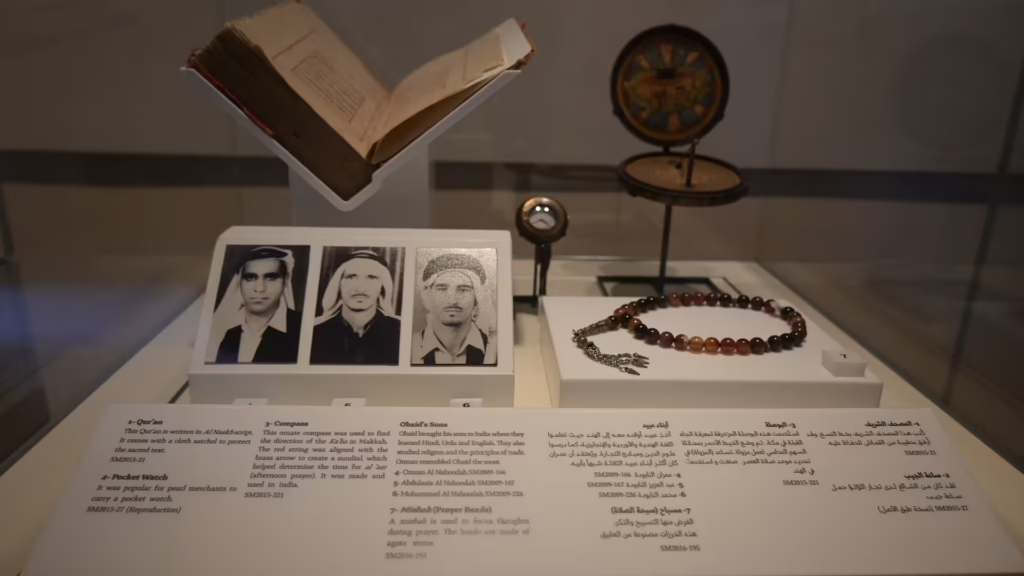
A small display case in the central exhibit holds objects that once moved through these rooms: a Holy Qur’an, a string of prayer beads, a pocket watch, a compass and portraits of Obaid Al Naboodah’s three sons. Each person followed a routine the house itself was built to contain.
When meaning becomes a guess
What the house was built to do and what visitors see today can be set side by side.
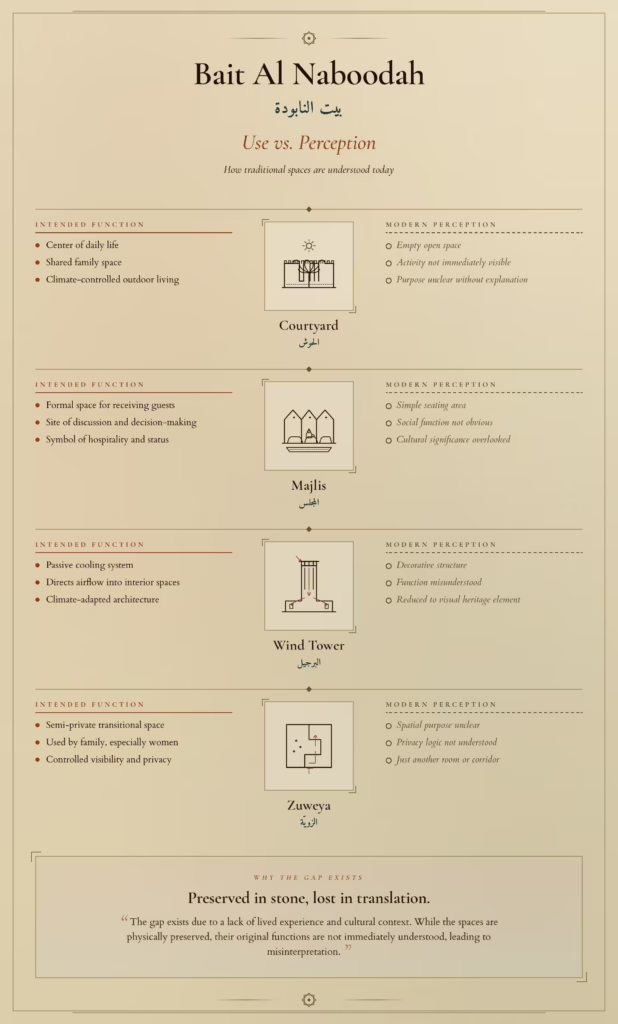
Near the entrance, staff hand over tickets and offer little else. From there, the visit is yours to interpret. For most younger guests, that interpretation does not come easily. Without context, the courtyard is a wide empty floor, the majlis an area with cushions, the wind towers tall stone shafts.
Omar Darwish, a recent design graduate from AUS, argues that the house is presented to younger visitors through a frame of cultural nostalgia rather than as a working system, which makes its practical details difficult to see.
He adds that the presentation itself signals that the life the house held belongs to a past that cannot be retrieved.
Darwish’s point lands on a tension that runs through heritage preservation across the Gulf. Buildings can be saved. The everyday knowledge that gives them meaning is harder to keep. Plaques explain, but they rarely place a visitor inside the life a house used to hold.
The result is a silent walking tour, where visitors move between rooms whose original purpose registers only as architecture. Without a frame of reference, the spaces are beautiful, photographable but without context.
An older voice
Not every visitor experiences the house this way. For older Emiratis, the rooms still speak in a language they recognize, even when they have not lived in a home like this for decades.
Outside Bait Al Naboodah, in a small seating area where a few older men sit in the late afternoon, Ali Yousef Al-Qusair offered a different version of the house’s history. He explained that it was a private residence long before it was a museum, and that the family who lived in it was much larger than a single household.
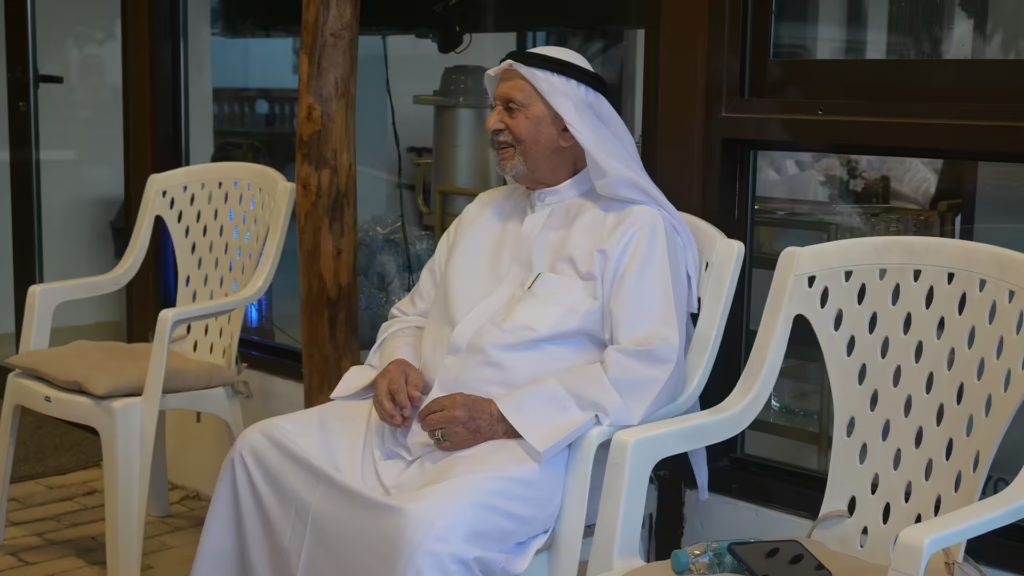
[Bait Al Naboodah wasn’t a museum back in the day. It happened when the heritage institute took over the place to reconstruct and build it all over again. So Bait Al Naboodah was a residential house and it had several families living in it. Why? Because Bait Al Naboodah was owned by the sons of Obaid Al Naboodah after his death — Essa bin Obaid, Mohammed bin Obaid, Ahmed bin Obaid, Ali bin Obaid, Abdulaziz bin Obaid, Omran bin Obaid and Rashid bin Obaid — so the house was divided into sections and they all lived in it. And after all that, the government and the heritage institute took over and changed it into a museum.]
That detail reframes the way the rooms read. The house was not lived in by one family but a shared compound, divided among brothers, with several households moving through it at once. The courtyard was not symbolic of community life. It was community life, for several households at a time.
When asked about the building itself, Al-Qusair provided background information that the placards failed to do
[The house is the same, but it has undergone maintenance and renovations. The house itself didn’t change and they didn’t build anything new in it. The house itself was completely renovated, just like The Chedi Al Bait hotel and all the other hotels in the area. It was renovated in the same way like Bait Al Shamsi. It was just a renovation, not complete changes, because these are all historical buildings.]
His point matters, because contrary to common assumption, what visitors walk through is not a reconstruction but the original house, restored. The walls, courtyard and rooms are the same ones the family lived in. These are details a visitor will not find on a label. They survive in memory, in conversation, and in the patience of someone willing to share them.
By late afternoon, the light has shifted. The sun cuts low across the walkways, and the beige walls take on a warmer, richer tone. The heat has not eased. The birds have. A guard makes a slow circuit through the upper rooms, his footsteps audible below.
Bringing the spaces back to life
The challenge facing Bait Al Naboodah is not preservation. The walls are intact, the screens are restored, the wind towers still stand. The challenge is interpretation — finding ways to let the house do what it was once able to do on its own.
That work, increasingly, falls to storytelling. Audio guides, oral histories and student-led documentary projects attempt to restore the layer of meaning that quiet rooms cannot supply. They turn architecture back into a setting for life.
For younger Emiratis, that encounter matters because a heritage site that is respected but not understood becomes symbolic, a place to visit, photograph and leave. However, one that is interpreted, narrated and inhabited, even briefly, becomes something else: a room you stood inside for a moment that someone you will never meet once called home.
The boy returns to the courtyard, and he does not know any of this. He runs because the courtyard is wide and the floor is cool and the birds are interesting. But in doing so, he is closer to the original use of the space than most adults who pass through it.
For a few seconds, before his mother calls him back again, the house sounds the way it was built to sound.