

By Myia Hamed
The needle moves slowly through the fabric, pulling thread into a pattern that has existed for generations. Shahd Mohammad, a Palestinian girl from Bourein, a small village near Nablus, leans forward in her apartment in Sharjah, hands steady, guiding each stitch with quiet precision. The room is still. The only sound is the wind through the window and the thread passing through the cloth.
She is stitching her wedding dress.
The craft came to her gradually. Shahd always made things with her hands. In the summer of 2024, she took a Fallahi (peasant) tatreez (traditional Palestinian embroidery) workshop. It was the first time she held a needle with intention. This intention led to a big decision.
When I stitch, I feel like I’m learning from my mom all over again.” Shahd Mohammad.
She will stitch her own wedding dress.
The fabric rests across her lap, but its meaning stretches far beyond the present moment. Each stitch connects her to something older than herself; something passed down through hands rather than history books. She learned tatreez from her mother, who learned it from hers, continuing a lineage carried through memory and repetition.
Tatreez has been part of her identity since childhood, long before she learned the craft herself. A photograph from her childhood shows her as a baby, barely able to sit upright, dressed in a small tatreez thobe. Tatreez was placed on her long before she had a say in the traditions she’d inherit.
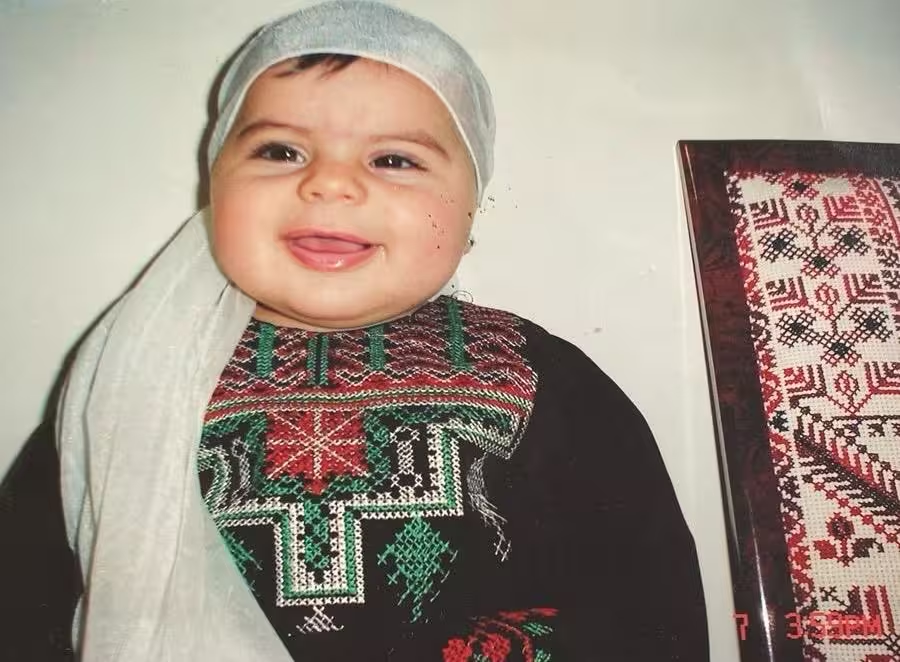
Every stitch is deliberate, placed carefully into the fabric. Her creation is not simply something to wear on a single day. It carries history, identity and emotion all at once.
Yet beyond this peaceful moment, tatreez does not remain still.
Tatreez as a Language of Identity:
For generations, Palestinian tatreez has functioned as a visual language. It communicates identity through thread and pattern, not words. Originating in villages across Palestine, embroidery designs were never simply decorative. They were deeply tied to place, culture and community.
Before, you didn’t need to ask where someone was from. You could see it immediately in the dress. Shahd Mohammad
A single dress could reveal where a woman came from. Patterns varied from village to village, forming a system of recognition understood across communities. Colors, shapes and motifs carried meaning, signaling aspects of identity that extended beyond the individual.
Thread became communication. Women stitched their lives into fabric, embedding stories into garments that could be worn, passed down and preserved. These designs reflected the history shaped by generations who used embroidery as a form of expression and documentation.
[Mama Rasha: Now, when I taught you tatreez I first had in mind that we should have something relating us to our culture and our Palestinian history, that we are following the path that we learned from our parents and our grandparents, especially that we are expatriates and I was born in Kuwait, and my parents were born in… my mom was born in Bahrain. So, we were raised to believe that even if we are abroad, we must remain connected to our land, connected to our religion, proud of our Arab identity. And we must protect all of our Palestinian culture from disappearing].
Patterns That Carry History:
Tatreez patterns were symbolic and shaped by the environments and communities in which they were created. British Museum ethnographer Shelagh Weir documented how each village developed its own embroidery vocabulary. Color combinations, motifs and stitches allowed a garment to function as a geographic marker, identifying its wearer’s community immediately. ¹
Widad Kawar, whose collection of over 4,000 Palestinian garments now forms one of the most significant archives of its kind, argued that tatreez was never incidental. Every pattern was a record of trade routes, seasonal life and family lineage, stitched into cloth because cloth endured when other records did not.²
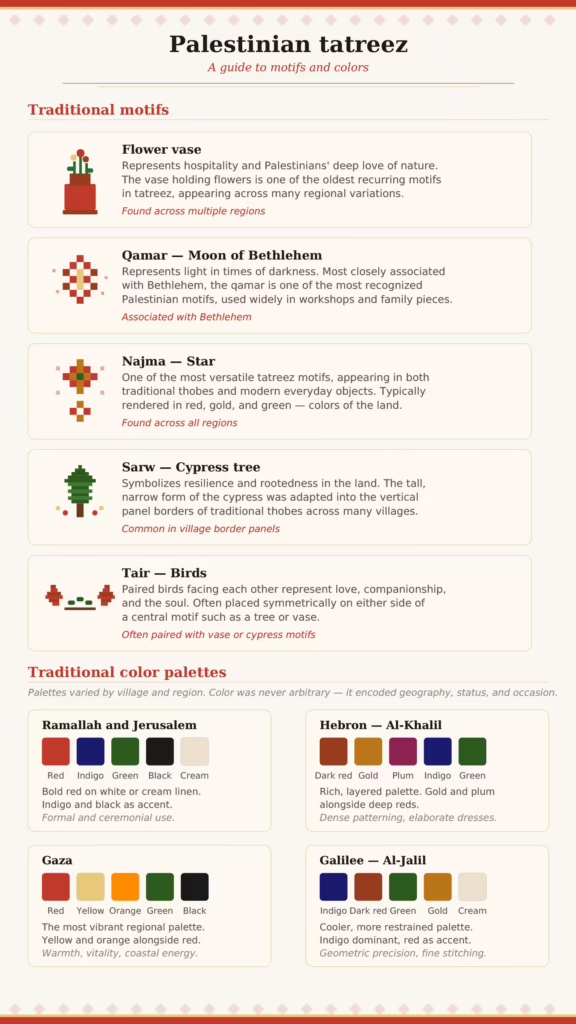
These patterns are like archives. They hold stories, even if we don’t always know how to read them anymore.Shahd Mohammad
In Shahd’s Sharjah apartment, a framed tatreez piece hangs on the wall, not tucked away, but displayed like art. It is one of several completed works she has made, each one a record of time spent, and patterns learned.
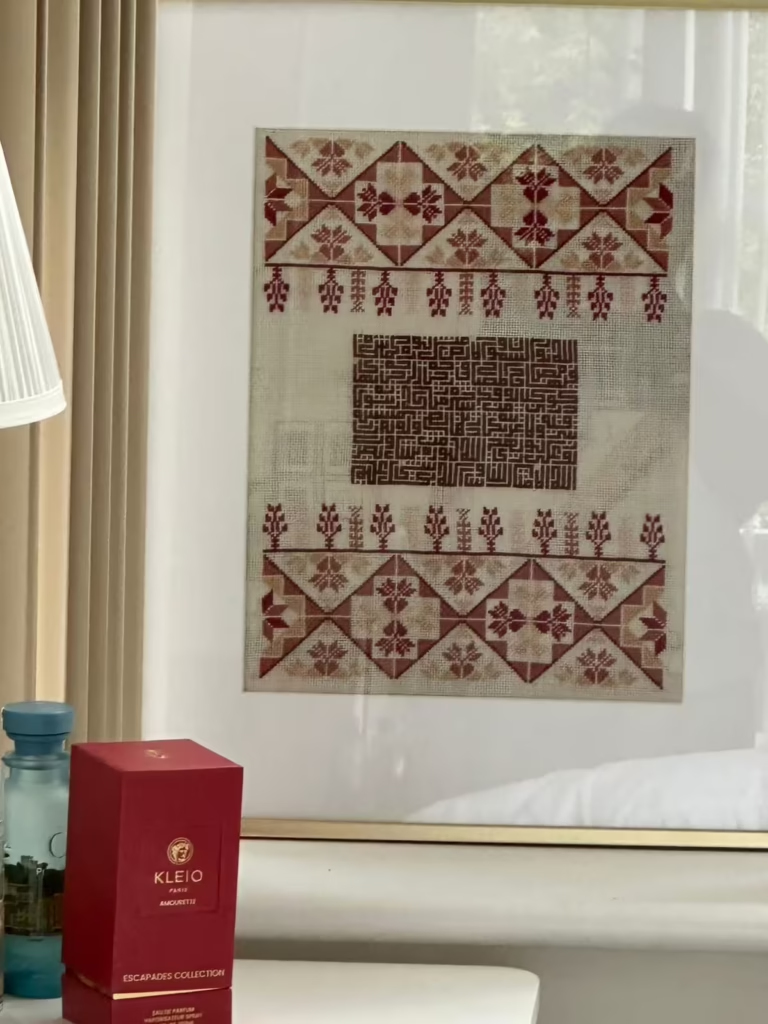
These designs were passed down through generations, preserved through repetition. Migration, displacement and cultural exchange have shaped how these patterns move as people move. Tatreez moved with them, adapting to new environments while carrying traces of where it came from.
The garments themselves followed a specific structure. A traditional Palestinian thobe was built around the qabbeh (collar). This meant the front panel was densely embroidered, which served as the visual and symbolic center of the dress. From there, the sleeves and the side panels of the skirt extended outward, each section stitched and assembled by hand. No sewing machines. Every stitch was made through techniques passed down alongside the embroidery itself.
One such technique is manajel. This is a method of attaching the panels of the thobe using a form of hand stitching. The fact that these dresses were constructed entirely by hand, from the embroidery to the assembly, means that every thobe was an art.
The tradition does not stop at Palestinian borders. Shahd draws inspiration from historical thobes of the Sinai region of Egypt, garments that also carry tatreez embroidery, a direct result of Sinai’s geographic proximity to Gaza. Communities living close to one another share more than land. They share visual languages, and the stitched patterns of Sinai and Gaza reflect centuries of that exchange.
Even when everything else changes, people hold onto tradition because it’s something you can carry. – Shahd Mohammad.
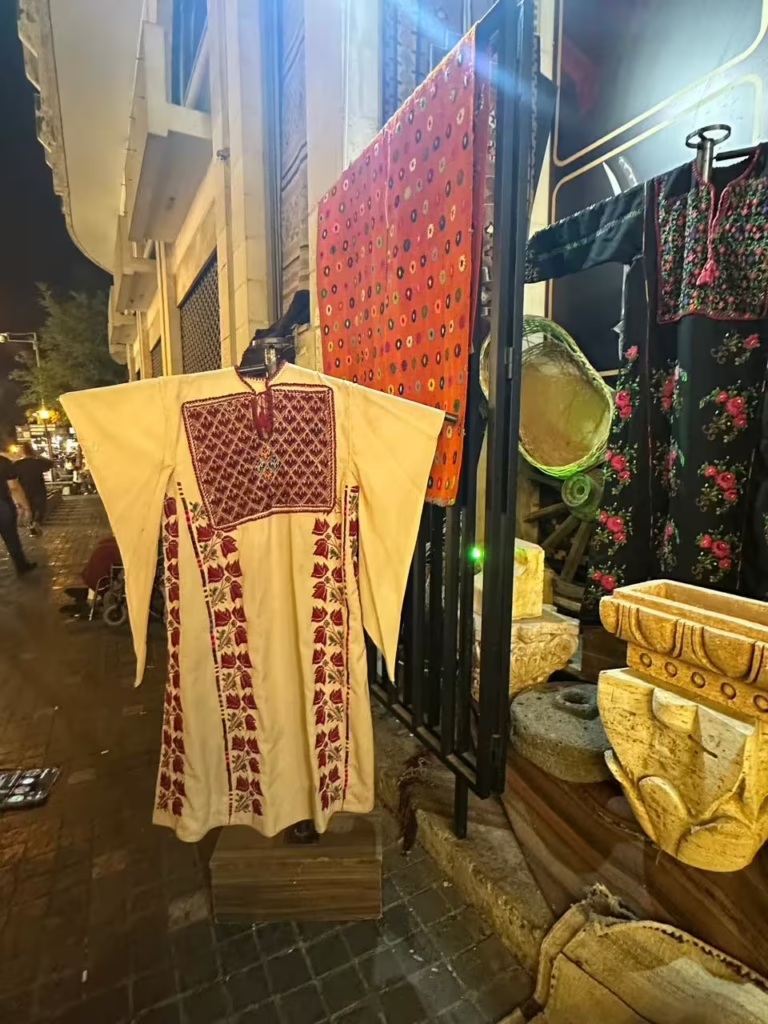
From Ceremony to Everyday Expression:
While Shahd’s wedding dress is rooted in tradition, tatreez today moves far beyond it. Nowadays, tatreez is stitched onto purses, headbands, layered onto jackets and woven into everyday clothing. What was once reserved for significant life events now exists in daily life, visible in classrooms, universities and on city streets.
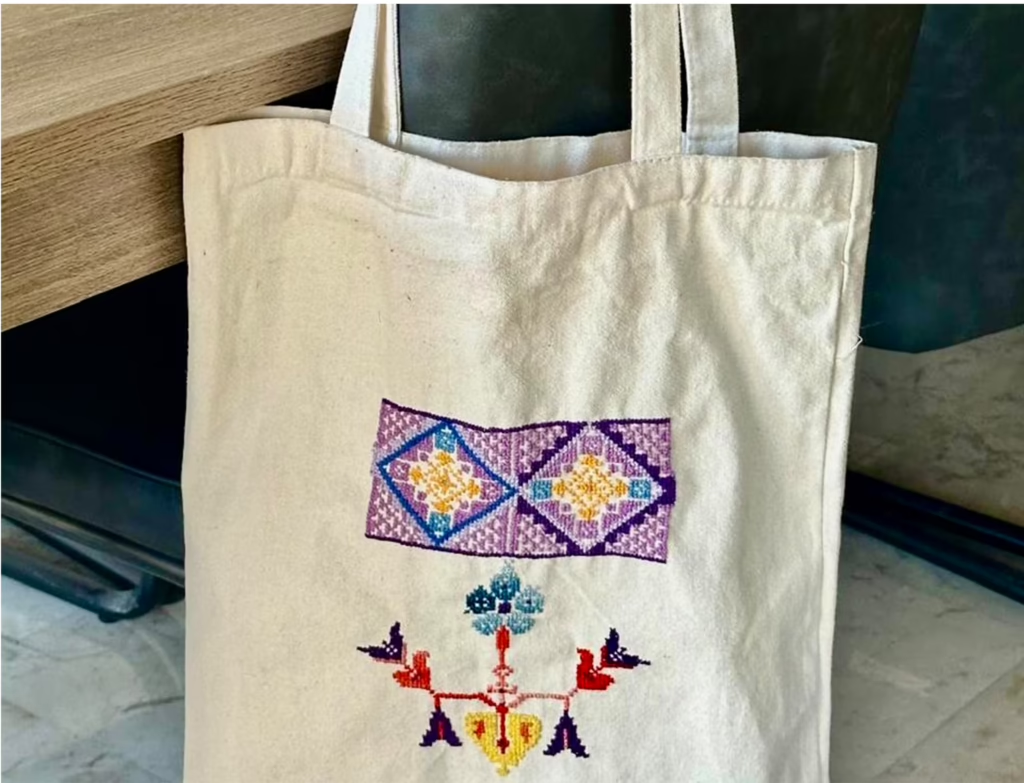
Even a tote bag becomes a canvas. Small, embroidered objects like these circulate through daily life, carried into cafes, classrooms and commutes, making tatreez visible in spaces where it was never traditionally found.
This is a relatively recent shift. Through the 19th and early 20th centuries, tatreez was stitched almost exclusively onto traditional thobes. The patterns belonged to the dress. Placing them onto a tote bag, a jacket, or a headband is itself a contemporary act, a decision to carry the motifs into new forms without abandoning their meaning.
The bag carries two motifs. The first is a flower vase pattern, signifying hospitality and Palestinians’ deep connection to the natural world. The second is the qamar (moon) motif, most closely associated with Bethlehem, representing light in times of darkness. Neither motif has a fixed historical date, their origins are rooted in the land rather than in a recorded moment, but both carry the weight of a community’s identity.
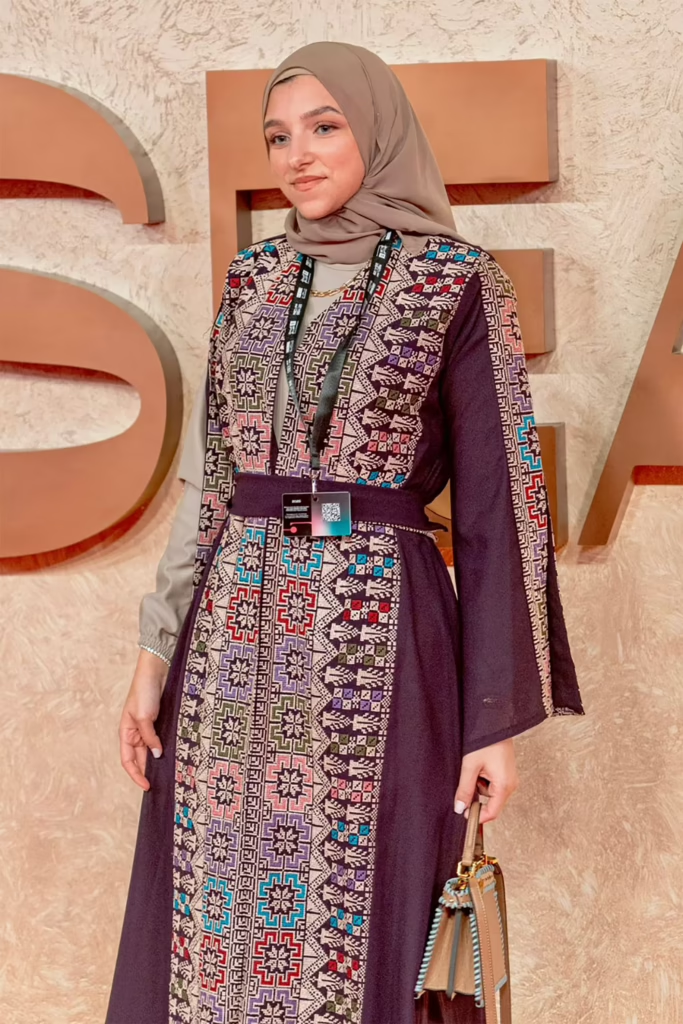
Ayah Al-Muqbel, a recent graduate of the American University of Sharjah, incorporates tatreez into her outfits almost every day. At the Red Sea International Film Festival in Saudi Arabia, she wore a tatreez-embroidered dress, not as a costume or a statement, but simply as what she chose to put on. For her, wearing it is not a formal declaration. It is simply part of her identity.
I wear it because it feels like me. It’s not about tradition in a strict way; it’s about connection.– Ayah Al-Muqbel
You’re not losing tradition by changing it. You’re keeping it alive. – Shahd Mohammad
Al-Muqbel and Mohammad both play a role in normalizing tatreez in everyday life. In February 2026, Shahd Mohammad organized a two-day tatreez workshop at Al Bareed Cafe in the Chedi El Bait hotel in Sharjah, open to anyone who wanted to learn. She sourced the materials, designed the curriculum, and taught complete beginners how to hold a needle. For her, passing the craft on is as important as practicing it herself. These smaller, wearable forms may not communicate regional identity with the same precision as traditional dresses once did, but they carry something equally significant: choice. They show how individuals actively engage with their heritage, deciding how and where to express it.
Shahd’s Wedding Dress:
I am so proud of my daughter for making this dress. Every stitch reflects her patience, dedication, and love for our culture. Seeing her carry these traditions forward in her own way means everything to me. – Mama Rasha
For Shahd, tatreez is not simply something she inherited; it is something she actively shapes. Her wedding dress becomes the center of this process, a space where tradition and individuality meet. She does not aim to replicate patterns exactly as they once were. Instead, she selects designs that resonate with her, alters them slightly, combines elements, and allows her own identity to influence the outcome.
The dress began as a sketch, measurements written in pencil, the silhouette mapped out in October 2025, months before a single stitch was placed.
In conversation, Shahd speaks less about perfection and more about meaning. The dress, she explains, is tied not only to marriage, but to identity, memory and the feeling of creating something entirely her own.
I didn’t want something that was just traditional. I wanted it to feel like me. Like my story, not just history. – Shahd Mohammad
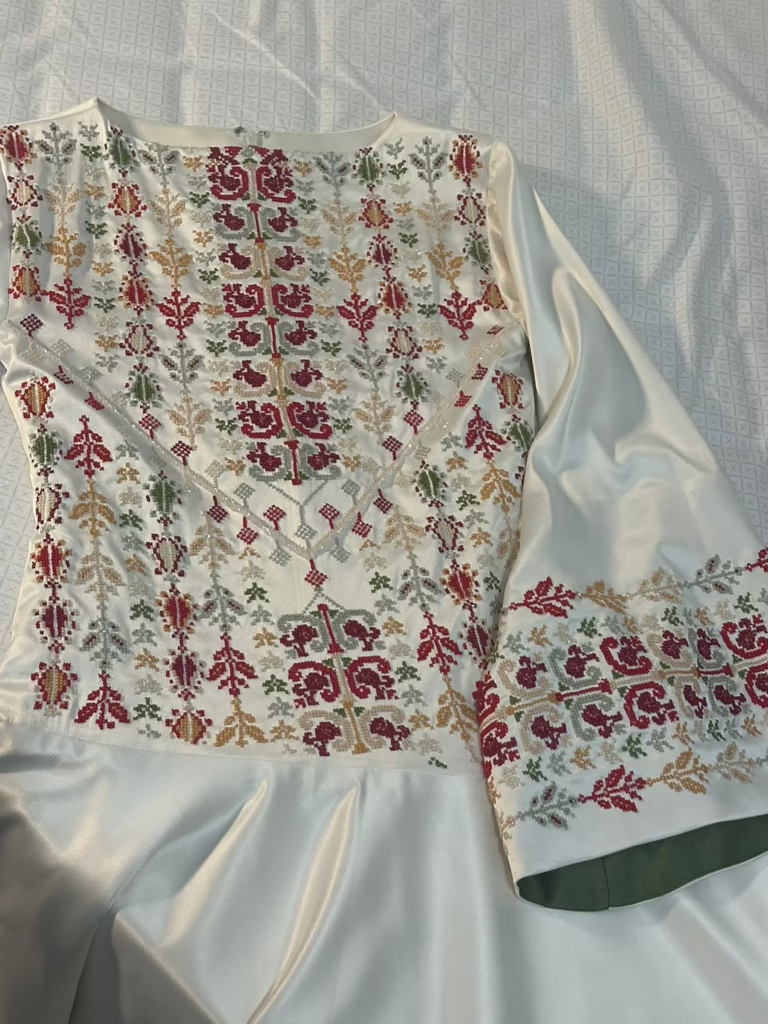
As she works, she pauses occasionally, running her fingers across the fabric, tracing the stitched patterns. The dress, still unfinished, already carries emotional weight. It reflects not only where she comes from but who she is becoming.
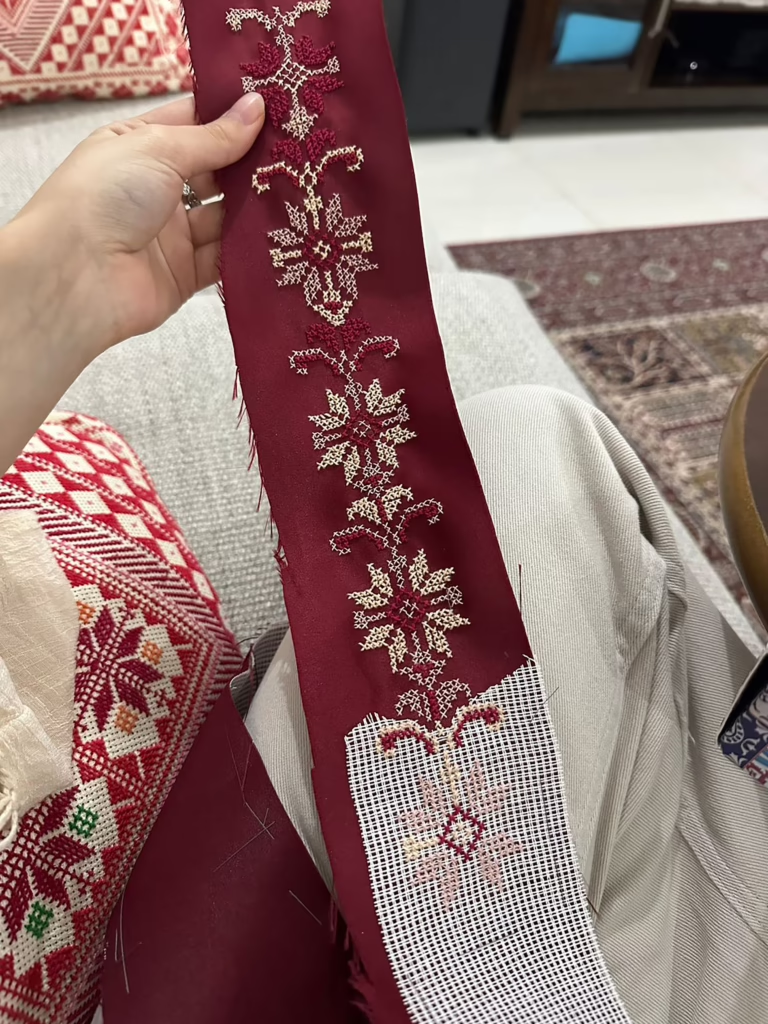
Before a single stitch is made, Shahd maps the pattern on her laptop using Stitchfiddle, a digital cross-stitch design tool. Each color block on screen corresponds to a thread color and a stitch on fabric. It is a thoroughly modern step in an ancient process, tradition and technology, all working in the same direction.
It’s weird,” she adds with a laugh. “I started this thinking it was just a dress, but now it feels like something bigger than me.
Even as she creates something rooted in tradition, Shahd exists in the same world where tatreez moves freely, on bags, on clothing, in everyday life. Her work becomes part of that larger shift, connecting tradition with the present.
Voices That Carry the Thread Forward:
For many in Sharjah’s Palestinian community, tatreez represents more than visual design. It carries emotional and cultural significance, connecting individuals to their heritage in deeply personal ways. This is something Shahd deeply resonates with.
“It reminds me of home. Even if I’m not there, it makes me feel connected.” Shahd Mohammad
At the workshop in Al Bareed Cafe, participants sat around a shared table, pattern sheets spread out, threads piled in bowls, and cake on a plate nearby. Some had never stitched before. By the end of the session, each person had begun their first motif. The keffiyeh draped across the table was not a prop. It was simply there, the way it often is in Palestinian spaces, present, without needing to be explained.
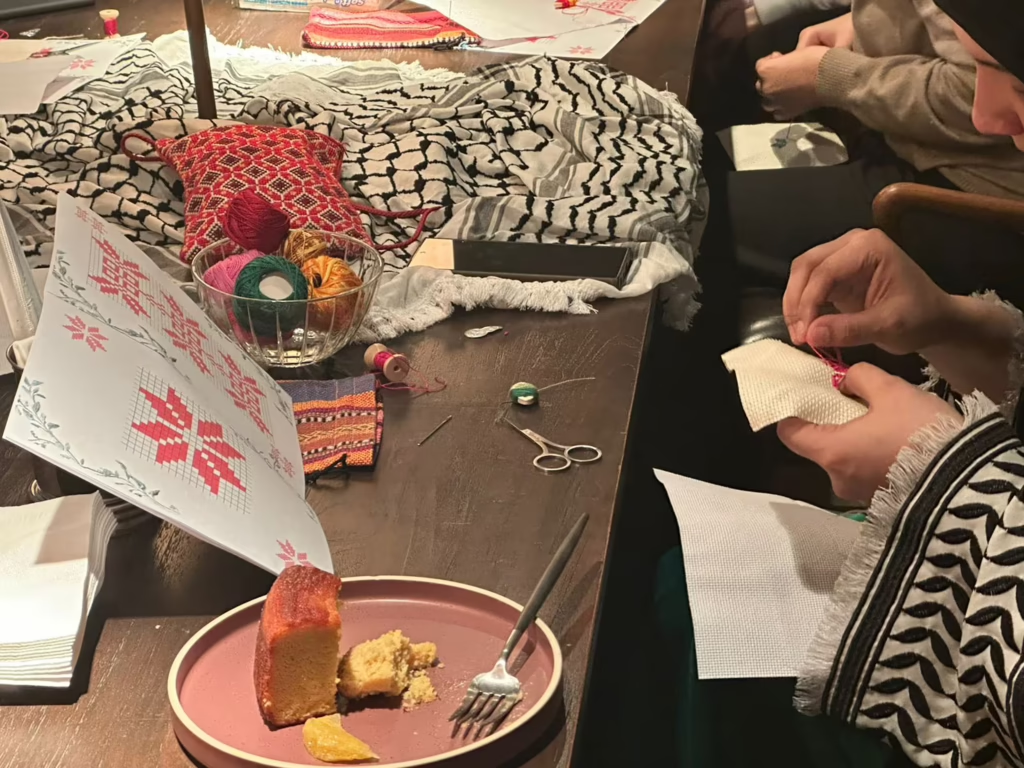
It’s not about copying what was done before. It’s about understanding it and then making it your own. – Shahd Mohammad.
The Art of Stitching
The process of embroidery itself reflects the nature of cultural preservation. It is slow, deliberate and requires patience. Each stitch builds upon the last, creating something meaningful over time.
[Mama Rasha: “As for our Traditional Palestinian Thobes, they are almost all similar in their model, but they differ in their motifs. Every land carries its own expressions … every land has its veins, its motif, its own way that mirrors the culture of that specific land. As for Shahd’s Thobe, she designed it and she excelled at making it, she chose the colors and the motifs that she loved, and it united the old and the new, as a model and detail. It gathered two cultures, the old and the new in a way that is well-looking and pretty, modest and very beautiful. So, I really loved that connection between the old and the new, so it wouldn’t be traditional. The traditional now is mainly worn by mothers, the elderly love wearing it, and I am with that. We must preserve the old but there is no problem for a new model to exist and be pretty, good-looking, and modest. Yet remains necessary to preserve the traditional and have it amongst us.]
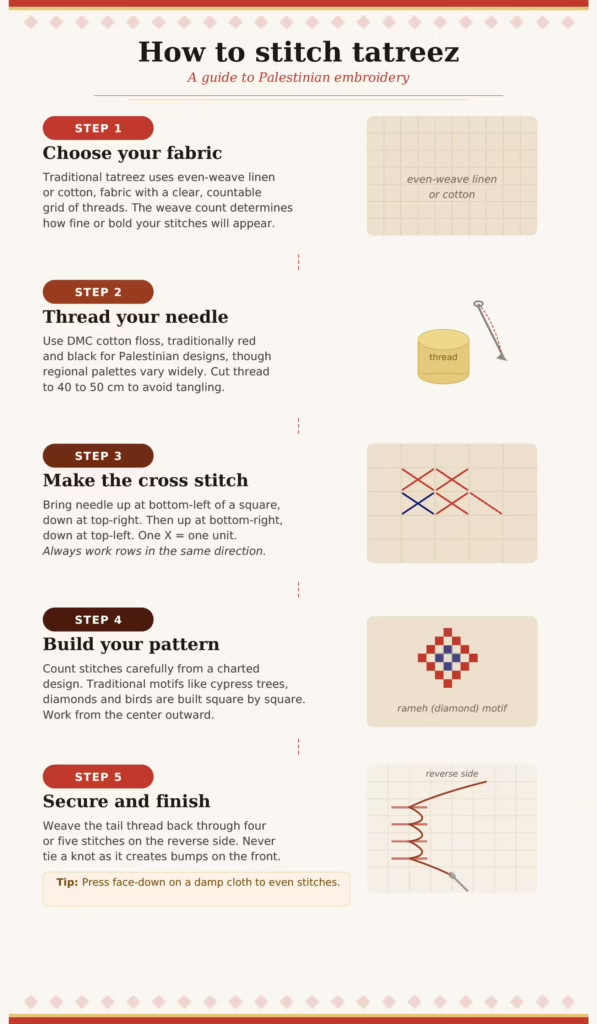
Named motifs carry their own histories. The Moon of Bethlehem, one of the most recognized Palestinian patterns, appears in workshop kits and family archives alike, a design so established it comes with its own printed label.
It teaches you patience. You can’t rush it. If you do, you’ll see it in the pattern.
As Shahd continues her work, the dress begins to take fuller form. What began as individual stitches becomes something cohesive, thread by thread, forming a larger story.
A Living Tradition:
From village traditions to everyday expression on AUS’s campus, tatreez continues to evolve while remaining rooted in its origins. It is both history and present, both inherited and reimagined, visible in the stillness of Shahd’s wedding dress and in the movement of Ayah’s daily wardrobe.
Tatreez is not confined to fabric alone. It lives in the people who carry it forward, shaping it with each new interpretation, memory, identity and culture stitched across generations, continuing to take form with every thread.
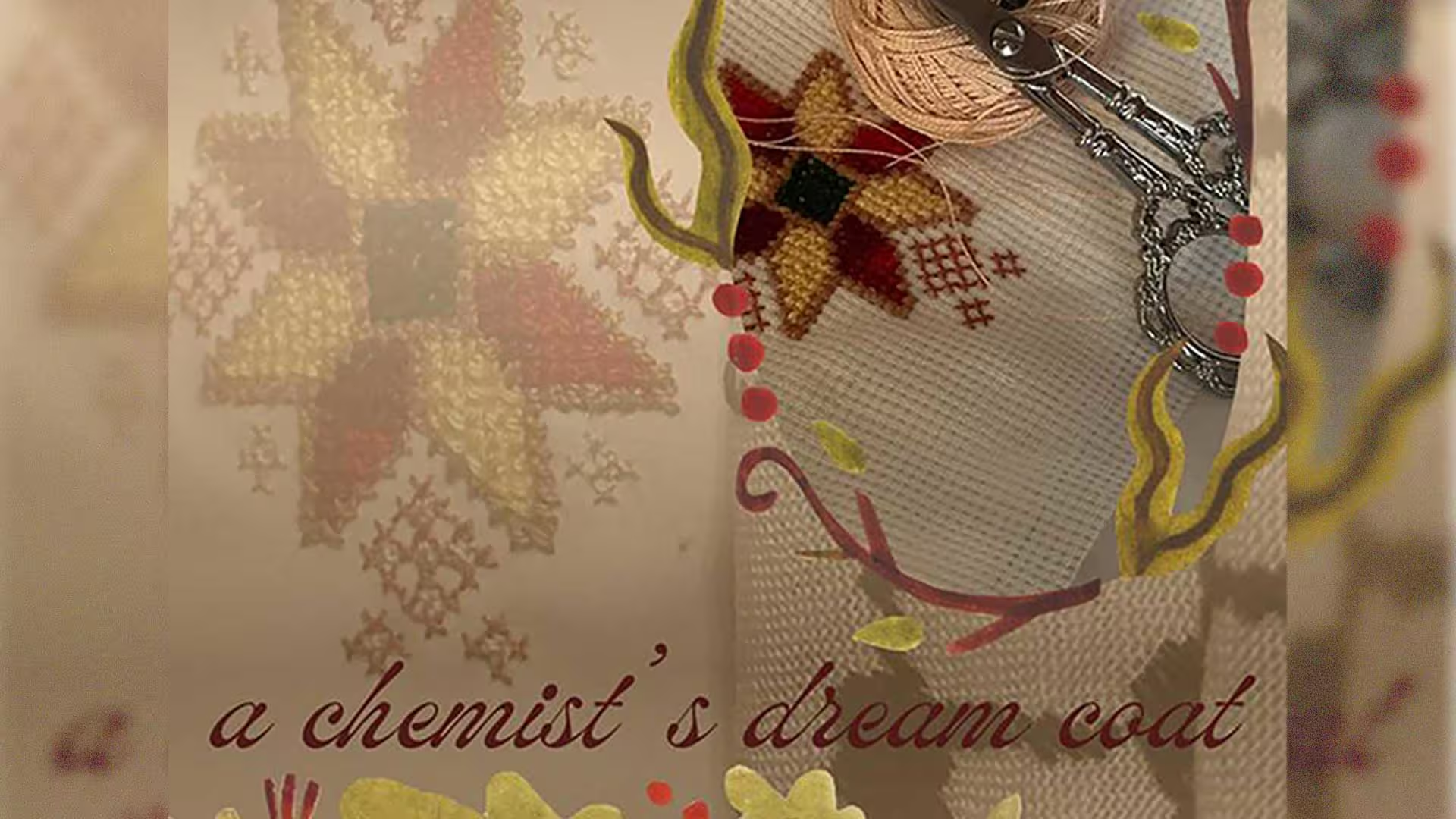
Shahd is a biochemistry major. On the pocket of her white lab coat, she has stitched a small tatreez motif, the same star pattern she has been refining for years. It sits there quietly, between the science and the self, proof that the two were never in conflict.
From childhood thobes to her wedding dress, tatreez continues to shape her life.