

By Dipti Rathod
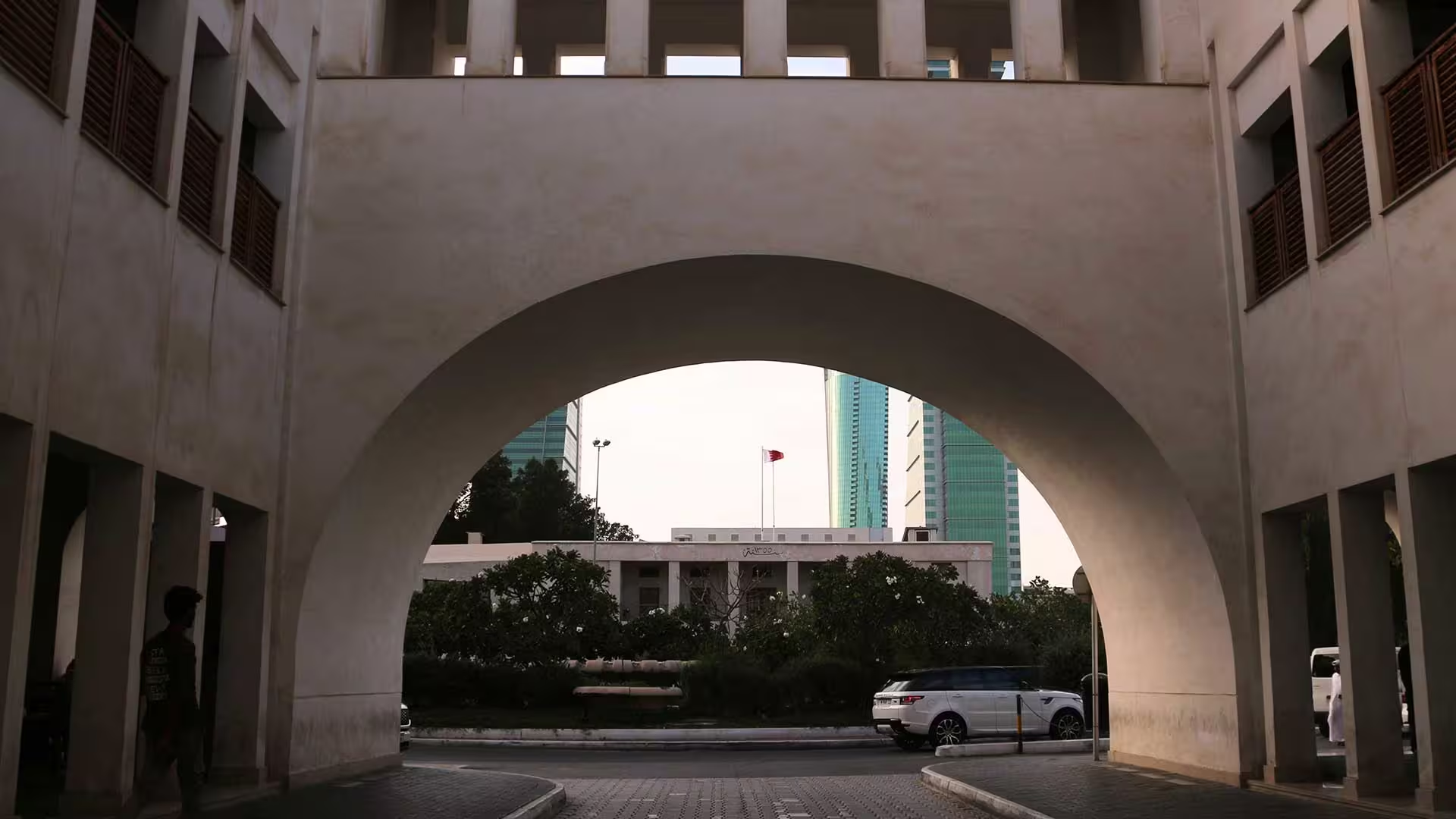
The white archways of Bab Al Bahrain stand quietly in the heart of Manama, holding their place between two distinct worlds. To the north, the glass towers of the Bahrain Financial Harbour pierce the hazy skyline of 2026. Whereas in the south, the narrow and winding corridors of the Manama Souq carry the steady rhythm of shopkeepers’ voices and passing conversations. For more than 70 years, this monument has served as the physical and emotional nerve center of the island nation. It has evolved from a literal gateway for seafarers into a cultural anchor of a modern metropolis.
History often feels distant or irrelevant to younger generations. Stories remain tucked away in archives or passing quietly through time, with few platforms bringing them to life in ways that feel immediate or engaging in a digital age.
The Original Coastal Gateway
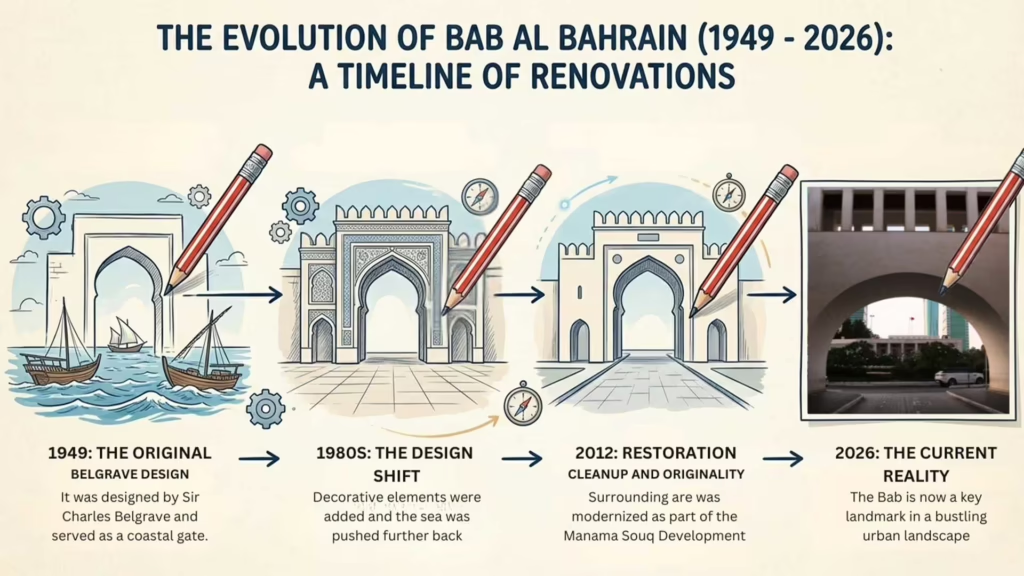
Caption: A Canva AI-generated clip, which shows an approximate visual of the transformation of the Manama Dock into the Bab Al Bahrain roundabout.
The building, translating to Gateway of Bahrain, officially started functioning when Sir Charles Belgrave completed building it in 1949. In its earliest days, the shoreline looked entirely different. Where a six-lane highway now hums with traffic, waves once crashed against the coast. The structure was never just ornamental. It served a real purpose for a country deeply tied to the waters of the Gulf.
Caption: The Bahraini design of the Bab is a common highlight amongst all these photos. It is simplistic, functional and color coordinated.
“I remember when I was six, the Malek Faisal Road didn’t exist,” says an elderly resident as he looks up at the flag on top of the arch of the Bab. “It was all open sea, and ships would leave the Manama Dock right here, carrying pearls and goods to many places. Until the early 1980s, you could still see the sea from the gate. The massive change happened during a period of intense land reclamation. Engineers pumped millions of cubic meters of sand from the seabed into the shallow waters in front of Manama and pushed the sea back by nearly a kilometer to create space for the modern highway system and the diplomatic area.”
“But, back then,” he adds, “Bab Al Bahrain was the center of national life. Government offices, including the Ministry of Interior, the passport office and even the former Prime Minister’s office, operated within its walls.”
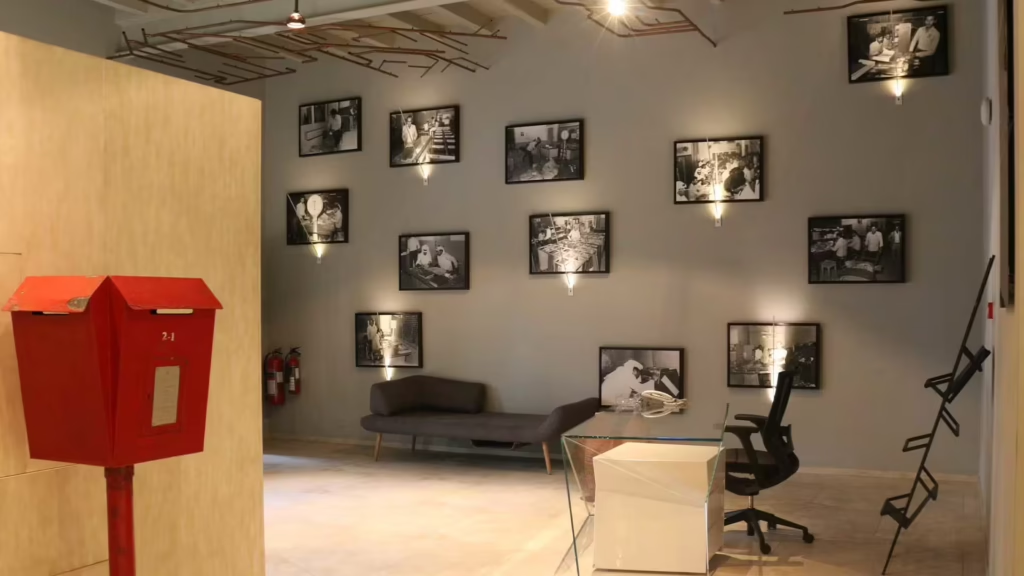
During this early period, this area was the heart of the country’s postal service. In front of the building stood the Manama post office. It was a place of high stakes and high-level governance where the state’s daily business unfolded amid the salt air.
From Maritime Trade to Modern Gold
Beyond the jewelry displays and polished storefronts, traces of Bahrain’s older trading identity still linger in the souq’s atmosphere. Before oil transformed the economy, Bahrain had an international reputation for its natural pearls, which were amongst the finest in the world. For generations, pearl divers sailed into the Gulf during the summer months, returning with oysters that fueled an entire economic system tied to merchants, traders and craftsmen. The wealth from pearling helped shape commercial districts around Manama long before modern financial towers appeared on the skyline.
Caption: The co-owner of Vikram Jewellers, Kunal Khimji, shares insights into the developments in Manama and the history of his gold shop.
In the decades after the Bab first opened, gold and raw materials arrived in a ship, tying commerce directly to the water that once reached the building’s edge. Even as the water receded and was replaced by asphalt, the legacy of that maritime trade remains in the family lineages of the merchants who still occupy the stalls today. Many of the merchants operating near Bab Al Bahrain today come from families who remained connected to trade. Gold gradually replaced pearls in the markets, bringing a new rhythm to the souq while preserving its tradition of craftsmanship and bargaining.
Walking through the jewelry shops of the Yateem Center today and the surrounding alleys represents a newer addition to the historic fabric of the souq. The glass counters shimmer beneath warm lights while shopkeepers greet customers with the same hospitality that has defined Gulf markets for centuries. The setting may feel modern, but the spirit of exchange remains deeply tied to the history of the port city that once stood directly beside the sea. While the pearling industry once dominated the economy, modern gold brands now hold positions of prestige near the gate. These shops bridge the gap between traditional craftsmanship and contemporary luxury.
Caption: A display of several images that show the changes and lifestyle in the current souq.
The Cultural Pulse of Manama Nights
One of the most significant ways the monument remains relevant today is through the celebration of Manama Nights every December. These events, organized by the Bahrain Authority for Culture and Antiquities, revitalize the historic district with a display of classic cars at the Yateem Center parking, along with a setup of the Manama Retro inside the mall. As the evenings unfold, the narrow lanes of routine daily trade begin to fill with visitors moving at a slower pace, drawn by sound and light rather than necessity. Traditional Bahraini music, often rooted in pearl diving rhythms such as fidjeri, carries through the space, reconnecting the present moment with the island’s maritime heritage. The presence of these performances reflects a broader effort across Bahrain to preserve intangible cultural heritage, an initiative supported by national cultural institutions over the past two decades. During these festivities, the area around the gate transforms into a vibrant cultural hub filled with music and outdoor cinema screenings. These nights encourage foot traffic back into the heart of the city.
Food stalls add another layer to the experience, offering dishes that reflect both local traditions and regional influences shaped by centuries of trade across the Gulf. Alongside traditional food, there is also a variety of contemporary cuisine options like chocolate-coated strawberries, iced coffees and matchas or fries. The outdoor cinema often features regional films or archival footage that quietly reinforce the connection between memory and place. While there are many clothing, pottery or painting stalls, there is also a space labelled as ‘The Red Carpet,’ which displays photos of some international as well as Bahraini cinema.
Similar heritage-focused initiatives are a key highlight in Muharraq, where restoration projects have highlighted the importance of preserving architectural and cultural identity. Within this context, Bab Al Bahrain serves not only as a backdrop but as a focal point for reactivating public space in a way that feels accessible to both residents and visitors. An additional aim of the Manama Nights event is to make the young attendees feel connected to their roots and understand their family histories and heritage better.
Caption: Khimji talks about the highlights of the Manama Nights event and the flow of the evening.
The event serves a critical purpose in bridging the generational divide and helps young visitors empathize with the nostalgia felt amongst many of the older generations. By hosting modern artistic performances in a historic setting, the organizers hope to help the early twenties visitors gain more information about the Bab and its surrounding souq. It is an effort to move history out of textbooks and into the lived experience of the youth to help them understand the era in which the island first began to assert its modern statehood on the global stage.
A Generational Knowledge Gap
Despite its physical prominence, there is a striking difference in what people know about the monument. Older generations who grew up in the 1950s and 60s viewed the Bab as the center of their daily existence. For them, it was where you went to mail a letter, apply for a passport, or watch the ships arrive. Their knowledge is rooted in the functional reality of the building. To them, the Bab is a symbol of the country’s working heart.
The 1980s generation grew up in a landscape that changed rapidly, with new developments rising where open spaces once stood. They grew up playing catch in vast, empty lands where buildings like the Financial Harbour or the World Trade Centre now stand. While the Millennials know the realities of the coastal history and administrative importance of the Bab only through word of mouth, they do have a firsthand experience of the changes that happened to the monument in 2012, as well as the developments of the surrounding banks, courts and hotels.
Caption: University student Vikram Rathod discusses the view of younger generations about the Bab Al Bahrain monument.
In contrast, the 2000s generation recognizes the gate as a beautiful landmark or a backdrop for photography, but they often lack the technical or historical context of its past. As the city expands into suburban areas, those who have not grown up near the Bab often miss out on the oral histories that passed through the souq. For a young person living in a modern villa in Saar, Riffa or Arad, the Bab can feel like a tourist destination rather than a piece of their own family history.
Additionally, most long-term residents and expatriates who have spent years in Bahrain may pass by without fully understanding the significance of Bab Al Bahrain, moving through modern highways and malls without encountering the layers of history behind the white facade of the monument. This knowledge gap is not rooted in disinterest but in distance from lived experience. Each generation sees the Bab through a different lens, shaped by the time and environment in which they grew up.
Bab Al Bahrain remains in place, steady and currently unchanged, yet constantly shifting in meaning. Thousands of people see it every day, but each person understands it in different ways. For some, it is a memory. For others, it is a discovery waiting to happen.