

By Morooj Al-Attas
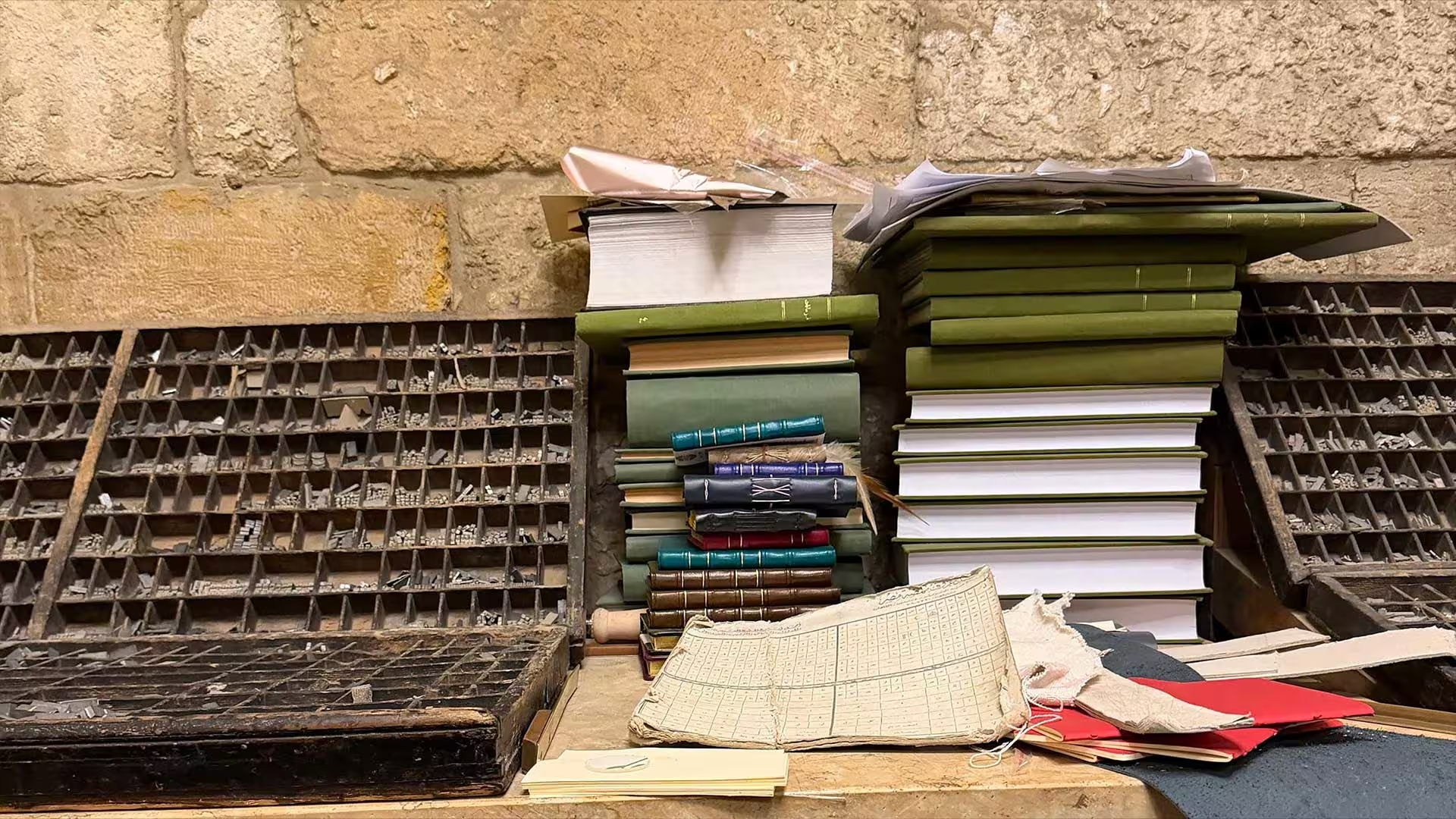
In an alleyway behind Al-Azhar Mosque, tucked at the back of a Mamluk building filled with jewel-colored books, Ahmed Abdelzaher presses his fingertips against a lettering stamp heating over an open flame, testing its temperature. Once it’s ready, he carefully lays a strip of gold leaf across the spine of a leather journal, embossing it with practiced precision.
This is how it has been done for generations in one of Cairo’s last traditional bookbinding workshops long before documenting life became something done with a swipe and a screen.
Since 1936, the Abdelzaher family has preserved the craft of bookbinding, passing it down through generations. Today, the workshop is run by Abdelzaher Ibrahim’s grandchildren, quietly maintaining a tradition that has endured in a rapidly digitizing world.
“We are keeping something alive,” Ahmed says. “People still come looking for something they can write in something that lasts.”
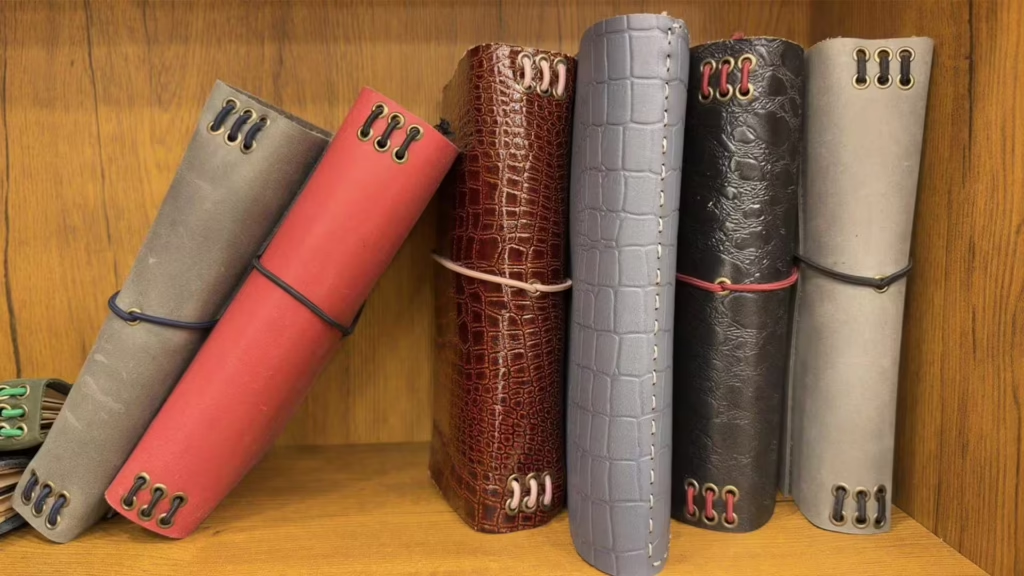
Long before camera rolls and social media archives, documenting life meant ink on paper something physical, something permanent. Today, that instinct has not disappeared. It has simply evolved.
Across different mediums from handcrafted journals to Instagram archives people continue to document their lives in ways that reflect not only how they experience the world, but how they want to remember it.
For 22-year-old Lina Khaled, documentation happens in real time. Her phone rarely leaves her hand, capturing everything from quiet coffee mornings to spontaneous late-night drives, often documenting small everyday moments that might otherwise go unnoticed.
“I feel like if I don’t post it, it didn’t really happen,” she says. “Not in a fake way, I just like knowing I can go back and see it.”
Her Instagram has become a personal archive; one she revisits often. Scrolling through past posts and highlights, she rediscovers moments she might have otherwise forgotten.
“Sometimes I go back and I’m like, I didn’t even remember this day,” she adds. “It’s like I get to experience it again.”
But for Lina, the habit is also tied to something deeper: a quiet fear of losing moments entirely.
“I think part of it has to do with being scared of losing a memory,” she says. “Like a really special moment happens, and if I don’t document it, I won’t have a permanent version of it. It just feels like it could disappear.”
For her, documenting life is not just about sharing, it is about preserving fleeting experiences in a way that feels immediate, tangible and lasting.
Yet for others, documenting life takes a slower, more reflective form.
Meanwhile, Rawa Alwazir turns to her journal not just to record events, but to understand them. Her pages are filled with a mix of writing and sketches, capturing places she has visited, thoughts she is working through, and emotions she wants to hold onto.
“Sometimes I love journaling about a good day just so I can live it again,” she says.
Her journaling practice goes beyond memory; it is also a form of self-reflection.
“I ask myself questions like, ‘What am I prioritizing and why?’ or ‘What’s worth my energy right now?’” she explains. “My journal helps me track patterns and see myself clearly, without judgment.”
Through writing, she creates a personal record of her life not just what happens, but how it feels. Whether it’s a joyful experience, a difficult lesson, or a fleeting thought, documenting it allows her to return to it later with clarity.
Journaling, once seen as a private and almost outdated habit, is also gaining renewed popularity among younger generations. On platforms like TikTok, millions of posts are dedicated to journaling, reflecting a growing interest in slowing down and documenting life more intentionally.
“I like to preserve what I do daily with insights, emotions, moments,” she adds. “Writing them down makes them feel more real.”
While their methods differ, the intention behind them feels strikingly similar. Each approach, whether shared publicly, stored digitally, or kept privately, serves to hold on to moments that might otherwise fade.
According to Ghaida Abdulhak, a psychology alumna, this behavior is deeply tied to how people process identity and memory.
“When people document their lives, they’re not just recording events,” she explains. “They’re organizing their thoughts and making sense of what they’ve lived through. It creates a sense of continuity—like a story of who they are.”
She adds that documentation can also offer a sense of control.
“In a fast-paced world, capturing moments helps people slow things down. It allows them to decide what matters, what is worth remembering.”
For Ahmed Abdelzaher, that need is something he has seen throughout his life in the workshop.
“Some people come back years later,” he says. “They tell us they filled their journals. That they can trace their memories back.”
In a world where memories are often stored in pixels and screens, the act of documenting whether through writing, posting, or preserving remains deeply human.
The tools may change, but the intention does not.
At its core, documenting life is not just about remembering what happened. It is about understanding it, holding onto it, and, in some way, making it last.